Plant Now, Cook Later: Beginner Vegetable Recipes That Decide What You Grow
You stand in front of the seed rack or nursery table again, frozen.
Cherry tomatoes or big slicers? Lettuce or spinach? Zucchini sounds easy, but what would you actually make with it besides one pan of grilled slices in July?
If you don’t cook much, choosing what to plant can feel like guessing. If you do cook, you might worry you’ll grow one awkward ingredient you never know how to use. Either way, you risk ending up with a sad bowl of cherry tomatoes and three giant cucumbers… and no idea what to do with them.
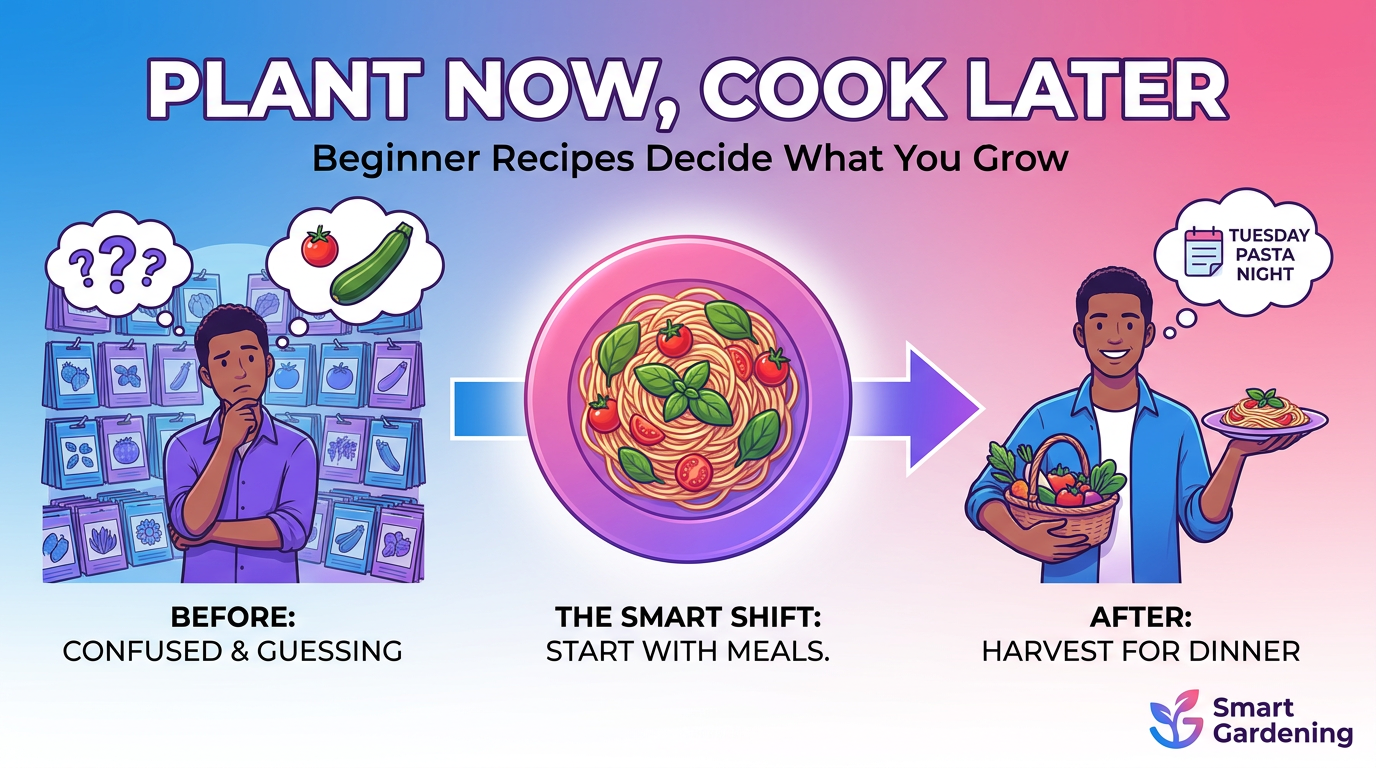
This is where most beginner gardens wobble: not at planting, but at the plate. The trick is to flip the process. Start with recipes so simple you could cook them on a tired Tuesday — then pick vegetables that feed those recipes.
Below, you’ll see exactly which easy dishes each plant can become, how little you need to grow, and how to match your garden plan to your real kitchen habits.
Start With Meals, Not With Seed Packets
Most new gardeners do this in spring:
- Go to a nursery or site.
- Grab whatever looks pretty or says "high yielding".
- Stuff it into any container they have.
- Months later: a random mix of veggies that don’t add up to dinner.
You’ll do the reverse.
Open your notes app (or a scrap of paper) and answer three questions as honestly as possible:
- What do you already cook on autopilot?
- Pasta with jarred sauce
- Omelettes or scrambled eggs
- Stir‑fries with frozen veg
- Sandwiches, wraps, toast
- What do you actually eat cold or raw?
- Salads
- Snack plates with hummus
- Veg in lunch boxes
- How many times a week do you cook at home?
- 1–2 nights: you need smaller, low‑pressure harvests.
- 3–5 nights: you can plan for regular use.
- 6–7 nights: you can grow a bigger variety.
Circle 3–5 meals you already make. Those are your “anchor” meals.
Examples:
- Pasta + omelettes + sandwiches
- Stir‑fry + rice bowls + salads
- Tacos + quesadillas + eggs
Everything you plant should plug neatly into those anchors. You’re not designing a farm. You’re building a tiny, living pantry for the food you already eat.
One Pot, One Recipe: The Simplest Way to Plan Your Garden
If you feel overwhelmed by planning, use this rule:
Each container = one future recipe.
That mindset stops you from crowdsourcing five crops into one pot "for variety" and ending up with nothing large enough to use.
A few clear examples:
- Pasta pot
- 1 medium pot of basil
- 1 cherry tomato in a 10–12 inch pot
- Egg and toast pot
- 1 small pot of chives or green onions
- 1 pot of spinach or baby kale
- Snack plate pot
- 1 window box of lettuce mix
- 1 pot of cherry tomatoes
- Stir‑fry pot
- 1 deep pot of bush beans
- A shallow pot of green onions and cilantro
Look at each pot and ask: "What exact recipe will this feed?" If you can’t answer in one sentence, simplify it.
From article 2 of this series, you’ve already seen that even a tiny deck can host several containers. Now you’ll assign each of those containers a job in your kitchen.
Salad Bowl Garden: Grow a Week of Lunches in Two Pots
If you pack lunches or want quick meals, salad ingredients are the most forgiving, beginner‑friendly crops you can grow. They also harvest in small amounts, so you don’t need to cook for a crowd.
What to grow for a no‑cook salad base
In two medium containers (at least 10–12 inches wide):
- Container 1: Leafy base
- Lettuce mix or leaf lettuce varieties ("cut‑and‑come‑again")
- Or baby spinach if your spring and fall are cool
- Container 2: Crunch + color
- 1–2 small radishes per 6 inches of surface, sown in rows
- A few green onions or chives tucked along the edge
If you have room for a third pot:
- 1 compact cherry tomato plant in a 10–12 inch pot near full sun
How to harvest just enough for one bowl
- Use clean scissors or pinch leaves above the center of lettuce or spinach, leaving the small heart intact.
- Pull radishes when they’re the size of a grape to a small walnut — smaller tastes better.
- Snip green onions or chives from the outside of the clump, leaving the middle to keep growing.
Do this twice a week and your plants keep pushing new growth.
Zero‑stress salad formula
Use this 60‑second format so you actually eat what you grow:
- Base: 2–3 loose handfuls of home‑grown lettuce/spinach.
- Crunch: 3–4 sliced radishes, a few green onion rings.
- Protein (from your fridge):
- 1 boiled egg, or
- ½ cup cooked chickpeas or lentils, or
- Leftover chicken, paneer, or tofu.
- Fat:
- 1–2 tbsp olive oil, or a spoon of mayo/yogurt.
- Acid + salt:
- Squeeze of lemon or splash of vinegar, plus salt and pepper.
Optional upgrades if you grow cherry tomatoes or herbs:
- A handful of halved cherry tomatoes
- Chopped basil, parsley, or cilantro on top
With just two or three containers dedicated to this pattern, you can cover 2–3 lunches every week.
Pasta Night Garden: Tomatoes, Herbs, and a Five-Minute Sauce
If you make pasta at least once a week, a tiny "pasta garden" gives you the biggest feeling of luxury for the least work.
What to grow for easy pasta
In containers on a sunny balcony, step, or window ledge:
- 1 cherry tomato plant in a 10–12 inch pot
- 1 basil plant (or more) in an 8–10 inch pot
- Optional add‑ons:
- 1 pot of oregano or thyme
- A small pot of flat‑leaf parsley
Cherry tomatoes are better than large slicing types for beginners:
- They ripen faster.
- They tolerate minor watering mistakes.
- A handful is enough for a meal.
From article 5 on basil, you already know how little effort it takes to keep basil going indoors or near a bright window — that same habit now fuels your pasta.
Five‑minute fresh tomato pasta (serves 1–2)
Use this when your plant gives you a small but steady trickle of fruit.
From the garden:
- 2–3 handfuls cherry tomatoes
- 1 loose handful basil leaves
From the pantry:
- 150–200 g dry pasta
- 1–2 tbsp olive oil
- 1 clove garlic (or ½ tsp garlic powder)
- Salt, pepper, chili flakes (optional)
Method:
- Boil salted water, cook pasta according to the packet.
- While it cooks, heat olive oil in a pan on low‑medium.
- Add sliced garlic (if using fresh). Cook 30–60 seconds, not brown.
- Add whole or halved cherry tomatoes. Sprinkle salt. Cook 3–5 minutes until they soften and burst.
- Turn off heat. Tear basil leaves into the pan.
- Drain pasta, reserve a splash of the cooking water.
- Toss pasta with the tomatoes and basil, adding a spoon of pasta water if it looks dry.
- Taste and adjust salt, add pepper and chili flakes if you like heat.
That’s it. No jar needed.
Basil oil for everything
If your basil explodes in warm weather, turn extra leaves into a multipurpose herb oil:
- Blend 1 packed cup basil leaves with ½ cup neutral or olive oil and ½ tsp salt.
- Store in a jar in the fridge for a week.
Use it to:
- Drizzle over pasta with store‑bought sauce.
- Brush on toasted bread.
- Spoon over fried eggs, grilled veg, or pizza.
One basil plant in a pot can upgrade three or four dinners a week when you treat it like a leafy green that you constantly harvest, not a decoration.
Egg and Toast Garden: Greens You Can Eat at Breakfast
Dinner recipes often get the spotlight, but breakfast is where small harvests really shine. A single handful of greens or herbs makes eggs and toast feel like a café meal.
What to grow for breakfast upgrades
Even if you only have a bright window:
- 1 pot of cut‑and‑come‑again greens
- Baby kale, spinach, or a mesclun mix
- Container: 8–10 inch wide, 6+ inches deep
- 1 pot of chives or green onions
- Container: 6–8 inches wide
- Optional: small basil or parsley pot for extra flavor
Five‑minute herb scramble
From the garden:
- A small handful of greens, chopped
- 1–2 tbsp chopped chives or green onion tops
From the kitchen:
- 2–3 eggs
- 1–2 tsp butter or oil
- Salt and pepper
Method:
- Crack eggs into a bowl, add a pinch of salt and pepper, whisk lightly.
- Heat butter in a nonstick pan over medium‑low heat.
- Add chopped greens. Stir for 30–60 seconds until just wilted.
- Pour in eggs. Stir slowly with a spatula, scraping the bottom.
- When eggs are softly set, turn off heat.
- Stir in chives or green onions at the end so they stay bright.
Serve on toast. If you have cherry tomatoes, halve a few and scatter on top.
Avocado toast, but cheaper
If you like avocado toast, use garden greens and herbs to make a similar, fresher effect without needing avocado every time:
- Toast bread.
- Spread soft cheese, hummus, or mashed beans.
- Top with chopped greens, herbs, salt, and a drizzle of olive oil.
You’ve turned two tiny indoor pots into a repeatable breakfast recipe.
Stir-Fry and Rice Bowl Garden: Turn Small Harvests Into Full Meals
Stir‑fries and rice bowls are perfect for new gardeners because they’re flexible. You can add whatever small pieces of vegetables you have on hand.
What to grow for stir‑fry flexibility
In containers:
- 1 big pot (10–12 inches, deep)
- Bush beans (green beans)
- 1 medium pot
- Pak choi / bok choy, tatsoi, or other Asian greens
- 1 shallow pot or window box
- Green onions + cilantro or parsley
You don’t need everything at once. Even just beans plus green onions can fuel simple bowls.
Simple garlic green beans stir‑fry
From the garden:
- 2 big handfuls of green beans
- Green onion tops or a bit of cilantro
From the kitchen:
- 1–2 cloves garlic (or ½ tsp garlic powder)
- 1 tbsp oil
- 1 tbsp soy sauce
- Optional: ½ tsp sugar or honey, chili flakes
Method:
- Trim bean ends. Cut into bite‑size pieces.
- Heat oil in a pan or wok on medium‑high.
- Add minced garlic. Stir 20–30 seconds.
- Add beans and a pinch of salt. Stir‑fry 3–5 minutes until bright and slightly tender.
- Splash in soy sauce (and sugar if using). Toss 30 seconds more.
- Turn off heat. Top with chopped green onions or cilantro.
Serve with rice or noodles and a fried egg. Your tiny harvest just became a full meal.
Mix‑and‑match rice bowl formula
When you have a random mix of veg ready — a handful of beans, a baby bok choy, some spinach — use this template:
- Base: Cooked rice, quinoa, or noodles.
- Veg layer (from the garden):
- Stir‑fried beans, greens, or chopped bok choy.
- Protein: Egg, tofu, leftover meat, or chickpeas.
- Sauce (from pantry):
- 1 tbsp soy sauce + 1 tsp sesame oil, or
- 1 tbsp yogurt + 1 tsp lemon + pinch salt, or
- Spoon of store‑bought curry or chili sauce.
Your garden doesn’t need to supply everything, just the fresh, crisp layer.
Taco, Wrap, and Quesadilla Garden: Fast Finger Food from Four Plants
If you like wraps, tacos, or quesadillas, you can tailor your garden to that style of eating. These meals use small amounts of many things, which is exactly how small containers produce.
What to grow for DIY taco nights
In a compact space, aim for:
- 1 pot of lettuce or looseleaf greens for crunch
- 1 pot of cilantro (or parsley if you hate cilantro)
- 1 cherry tomato pot
- 1 pot of jalapeño or mild chili pepper (optional but fun)
Ten‑minute garden quesadillas
From the garden:
- A handful of chopped greens (lettuce, spinach, baby kale)
- 1–2 tbsp chopped herbs (cilantro/parsley)
- A few halved cherry tomatoes
From the kitchen:
- 2 small tortillas
- ¼–½ cup cheese (any melting cheese)
- Oil or butter
Method:
- Heat a pan on medium, add a thin film of oil or a bit of butter.
- Place one tortilla in the pan.
- Sprinkle cheese evenly.
- Scatter on chopped greens, herbs, and tomatoes.
- Top with the second tortilla.
- Cook until the bottom is golden, then flip and cook the other side.
Slice into wedges. Serve with a squeeze of lime or a spoon of salsa.
Quick garden salsa upgrade
If you don’t have full‑sized onions or peppers, you can still upgrade store salsa:
- Mix jarred salsa with:
- Chopped cherry tomatoes
- Chopped cilantro
- A few finely sliced jalapeño rings, if you grow them
Your tiny plants stretch a store‑bought base into something fresh.
Snack Garden: What to Grow If You Barely Cook
Maybe you don’t cook often at all. You still open the fridge looking for a snack.
If your goal is more "grab‑and‑eat" than "recipe", design a snack garden.
Best snack‑friendly crops for beginners
In small pots or railing boxes:
- Cherry tomatoes
- Eat straight off the plant or with a pinch of salt.
- Cucumbers (bushy, compact types)
- Slice and dip in hummus or yogurt.
- Sugar snap peas (in cool seasons)
- Eat whole, pod and all.
- Radishes
- Crunchy bites with salt and butter or cream cheese.
- Mint (in its own pot — it spreads)
- For lemonade, tea, or to chew for a fresh taste.
Two‑ingredient garden snacks
When you’re low on time or energy:
- Salted tomatoes
- Halve cherry tomatoes, sprinkle with salt and a few drops of olive oil.
- Radish bites
- Slice radishes, spread a bit of soft cheese or butter, sprinkle salt.
- Cucumber cups
- Thick slices of cucumber with a small scoop of hummus on top.
- Mint tea
- Handful of mint leaves in hot water with honey.
If a recipe has more than three steps, skip it. This garden is about making the easiest choice the freshest one.
How Much to Plant for a Recipe You’ll Actually Cook
You don’t need a big garden to cook real food, but you do need realistic expectations. One basil plant won’t cover pesto for a party, and one lettuce plant won’t feed salads for four people every day.
Use these rough guidelines for a household of 1–2 people who cook a few nights a week.
Salad and greens
- Lettuce mix
- 1 long window box (24–30 inches) = 2–3 side salads per week
- Spinach or baby kale
- 1 medium pot (10–12 inches) = a handful for eggs or pasta 2–3 times a week
Tomatoes
- Cherry tomatoes
- 1 plant = a small handful of fruit every couple of days in peak season
- Enough for:
- 1–2 pasta dishes per week, or
- Daily snacks + occasional salad add‑ins
Herbs
- Basil
- 1 healthy plant = regular handfuls for pasta and salads if you pinch often
- Cilantro / Parsley / Chives
- 1 pot each = frequent garnish for eggs, bowls, and tacos
Beans and crunchy veg
- Bush beans
- 1 deep 10–12 inch pot (3–4 plants) = a couple of generous side dishes per week at peak
- Radishes
- 12–18 plants in a window box = crunchy salad/topper add‑ins for 2–3 weeks
You can scale up or down based on how often you cook. If you regularly throw away greens that went slimy in your fridge, start with fewer plants. You can always add more containers next season.
Build a Mini Seasonal Menu From Your Garden Plan
Now that you’ve seen specific recipe ideas, turn them into a simple seasonal "menu" that guides what you plant.
Step 1: Pick your top 3 meal types
From everything above, which three meals excite you most and match how you live?
For example:
- Salad bowls for lunch
- Pasta night
- Egg and toast breakfast
Or:
- Stir‑fries
- Tacos/wraps
- Snack plates
Step 2: Create a garden → kitchen map
In your notebook, draw three columns:
- Meal
- Plants needed
- Containers
Example:
Meal: Pasta night
- Plants:
- 1 cherry tomato
- 1 basil
- Containers:
- 10–12 inch pot in full sun (tomato)
- 8–10 inch pot in part to full sun (basil)
Meal: Salad lunches
- Plants:
- Lettuce mix
- Radishes
- Green onions
- Containers:
- 1 window box for lettuce
- 1 narrow pot for radishes + onions
Meal: Egg and toast breakfast
- Plants:
- Baby spinach
- Chives
- Containers:
- 1 medium pot for spinach
- 1 small pot for chives
This becomes your shopping list when you go to a garden center (article 7 in this series walks you through exactly what to ask for there).
Step 3: Plan your first week of cooking
Before you plant a single seedling, write down 4–5 ultra‑simple meals you’ll make once things start producing.
Example week for one or two people:
- Monday: Garden salad with chickpeas
- Tuesday: Basil and tomato pasta
- Thursday: Stir‑fried green beans over rice
- Saturday: Herb omelette and toast
You’re not making a strict diet plan. You’re giving your future self a reason to walk out, harvest, and cook.
You don’t need a huge backyard or perfect skills to eat from your own plants. You need a short list of recipes that feel easy on a tired evening, and a handful of containers dedicated to feeding those recipes.
Plant now with your plate in mind. Every small harvest — five cherry tomatoes, a fistful of basil, a handful of lettuce — suddenly makes sense when you know exactly which pan or bowl it belongs in.