Desert-Inspired Veggie Gardening: Beat Heat, Save Water, Grow Food
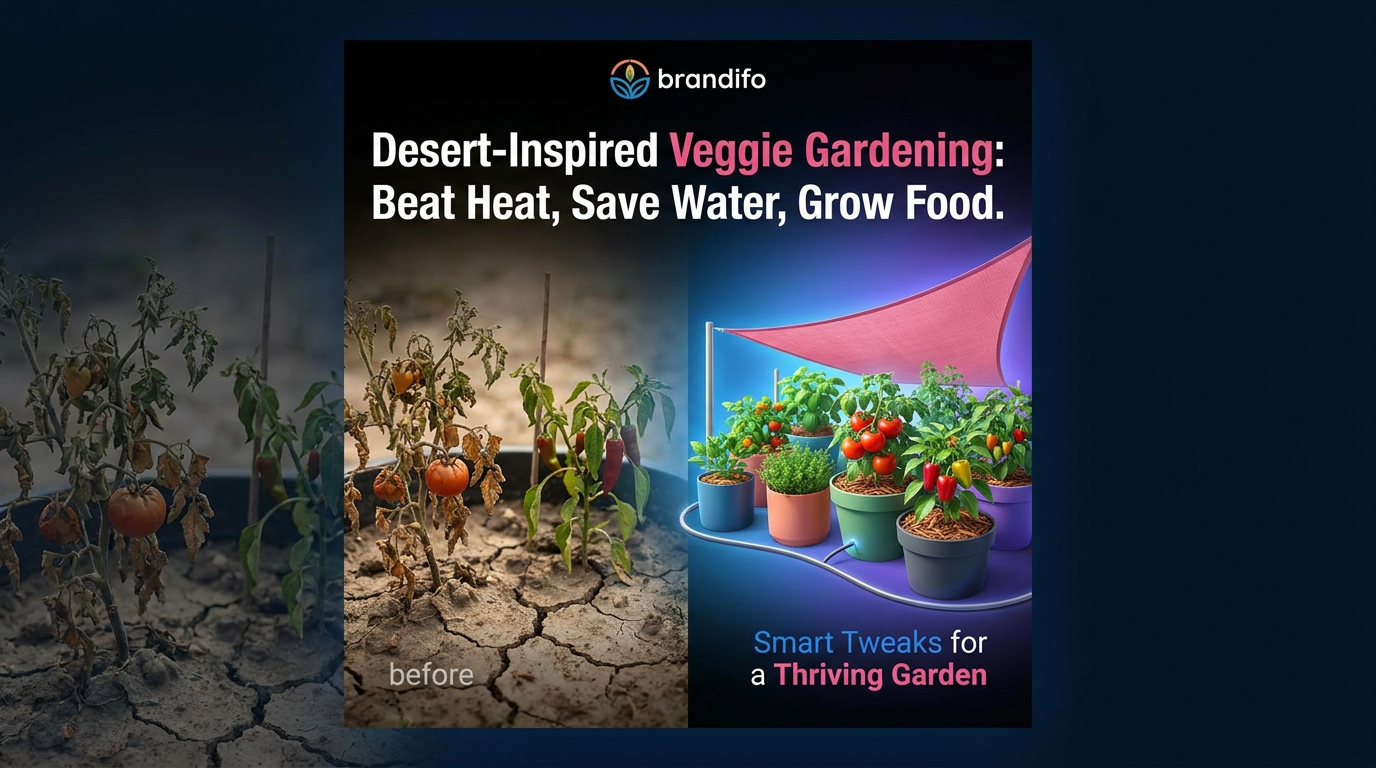
You set out a few hopeful tomato and pepper plants, watered them like the tag said, and watched them… crisp. The soil turned to concrete between waterings. Leaves curled, flowers dropped, and by mid‑summer your containers looked like ashtrays.
If you live where summer feels like the inside of an oven, it can seem like vegetable gardening is only for cooler, kinder climates. Then you visit a desert botanical garden, see lush beds of plants thriving in full sun with barely any irrigation, and wonder: why does everything fry at home when it clearly doesn’t have to?
This guide borrows the tricks those gardens use to keep plants alive in brutal heat and shows you how to adapt them to vegetables in containers and small beds. You don’t need a huge yard, a fancy irrigation system, or endless water. You need a few smart tweaks: where you put your pots, how you build the soil, what you plant, and when and how you water.
Why Your Veggies Fry While Desert Gardens Thrive
Extreme heat doesn’t just mean “more sun.” It changes how everything works in your garden.
Here’s what’s happening when your plants collapse at 3 p.m. while a desert botanical garden still looks serene:
- Soil temperature spikes. In dark pots on concrete, soil can hit 45–60°C (113–140°F). Most vegetable roots stop working well above 30°C (86°F).
- Water evaporates faster than roots can drink. Top 5–8 cm of soil dries in an hour in full sun and wind. Plants wilt even though deeper soil might still be moist.
- Leaves shut down. In extreme heat, plants close stomata (those tiny pores) to prevent water loss. That also stalls growth and fruiting.
- Reflective surfaces double the trouble. White walls, light gravel, and glass bounce extra heat and light onto leaves and pots.
Desert botanical gardens design around these exact problems:
- They shade the soil and roots, even when the plant canopy is in sun.
- They use deep, well‑drained but moisture‑retentive soil, not pure sand or hard clay.
- They choose plant combinations that shelter each other.
- They deliver water slowly and deeply, not as a daily sprinkle.
Your goal: Copy those principles on a smaller, veggie‑friendly scale.
Start by Treating Sun Like a Tool, Not a Default
In cool, cloudy places, gardeners chase sun. In hot, dry climates, you have to edit it.
Desert gardens rarely plop plants in open, all‑day sun with no protection. They use trees, walls, pergolas, and even metal screens to create slices of sun and shade.
For vegetables, think in terms of hours of direct sun and time of day:
- In very hot summers (regularly over 35–38°C / 95–100°F), many veggies do best with 4–6 hours of direct sun, ideally morning.
- Afternoon sun from the west is harsher than morning sun from the east.
Practical steps for a small space:
- Map sun and shade for one day.
- Every 2–3 hours (8 a.m. to 6 p.m.), take a photo or make a quick sketch: where is full sun, where is dappled shade, where is full shade?
- Mark spots that get morning sun and afternoon shade. Those are gold for plants that tend to scorch.
- Use movable containers to your advantage.
- Put your thirstiest, most heat‑sensitive plants (like lettuce or cilantro) where they get sun before noon, shade after.
- Reserve the sunniest, hottest spot for heat lovers in large containers: chilies, okra, eggplant, sweet potatoes.
- Create shade where none exists.
- Attach 60–70% shade cloth to a simple frame or railing to block brutal afternoon sun without making it dark.
- Hang bamboo blinds or reed screens on western sides of balconies.
- Use an existing tree or tall shrub as a “nurse plant” and cluster containers on its cooler eastern or northern side.
Think of your space the way a desert botanical garden does: a mosaic of microclimates. You’re not stuck with one giant blast of sun—you’re creating pockets your vegetables can handle.
Build Desert‑Wise Soil: Fast Drainage, Deep Moisture
Stand in a desert display bed and scrape the surface. It’s rarely just sand or just clay. You’ll feel a mixture of mineral soil, compost, and a top layer of coarse material (gravel, small stones, chipped wood) that protects the surface.
For vegetables in hot, dry areas, your soil or potting mix needs to do three things at once:
- Drain fast enough that roots don’t rot after a deep watering.
- Hold enough water that you’re not watering three times a day.
- Stay cooler than the air temperature.
For containers
Use this simple formula per 10 L (roughly 2.5 gallons) of mix:
- 5 L high‑quality potting mix (peat/coir based, not garden soil)
- 3 L finished compost
- 1–2 L drainage material: perlite, pumice, or coarse sand
- A handful (½–1 cup) of worm castings if available
Mix thoroughly. Then copy what you see in desert beds:
- Top each pot with 2–4 cm of coarse mulch: small gravel, pumice, pine bark, or chopped straw.
- Make sure there’s no exposed mix if you can help it; bare soil heats and dries extremely fast.
For small raised beds
If you’re starting a 1 x 2 m or 4 x 8 ft bed in hot, dry conditions:
- Loosen native soil at least 20–30 cm deep with a fork.
- Mix in:
- 5–8 cm layer of compost over the surface and blend into the top 20 cm.
- Up to 25% by volume of coarse sand or small grit if your soil is heavy clay.
- Top the bed with 5–8 cm of mulch around (not against) plant stems.
Mulch is non‑negotiable in heat. It mimics the protective “armor” layer you see in desert landscapes. Studies regularly show mulch can reduce surface evaporation by 50% or more.
Choose Desert‑Capable Vegetable Varieties, Not Just Types
You’ve probably heard “grow heat‑tolerant varieties.” In hot, dry places, that’s not a vague suggestion. It’s the difference between harvest and heartbreak.
Desert botanical gardens fill their beds with plants native to or selected for harsh climates. You can do the same with veggies.
Heat‑tough vegetable types
These crops are generally more forgiving in hot, dry gardens, especially in containers and small beds:
- Chilies and hot peppers (often tougher than sweet peppers)
- Okra
- Eggplant
- Cherry and grape tomatoes (more than large slicers)
- Sweet potatoes (for greens and tubers)
- Long beans / yardlong beans
- Cowpeas / black‑eyed peas
- Malabar spinach (a heat‑loving vine, not true spinach)
- Amaranth / callaloo (grown for leaves)
- Bottle gourd, ridge gourd, bitter gourd (where culturally common)
What to look for on seed packets and plant labels
When you shop (see article 7 in this series for garden‑center questions), scan for words like:
- Heat tolerant
- Slow bolting (for greens and herbs)
- Resistant to cracking (tomatoes)
- Good for hot climates
- Region names known for heat (e.g., “Hyderabadi,” “Arizona,” “Tamil Nadu” selections)
If you’re growing in a climate that hits 40°C+ (104°F+):
- Favor cherry tomatoes over big beefsteaks.
- Choose small‑fruited peppers over bell peppers.
- Look for Asian, Middle Eastern, or African varieties of okra, eggplant, and cowpeas—these are often bred for heat and drought.
By picking varieties that already “expect” heat, you’re not fighting biology the entire season.
Copy Desert Layering: Plant Combinations That Protect Each Other
Walk through a desert botanical garden and notice how rarely you see a single specimen standing alone in open soil. There’s usually a canopy layer, a mid‑layer, and groundcover or rocks.
You can adapt that structure to edible plants in containers and small beds.
In raised beds
Think in three layers:
- Tall or vining layer – provides filtered shade
- Corn (if you have enough space), pole beans, gourds, climbing cucumbers on trellises.
- Mid layer – main crop layer
- Tomatoes, peppers, eggplants, okra.
- Ground layer – living mulch
- Basil, oregano, thyme, purslane (edible in many cuisines), low lettuces in cooler months.
Example combo for a 1 x 2 m (about 3 x 6 ft) bed:
- North side: a trellis with yardlong beans.
- Middle: a row of peppers and eggplants.
- Edges: basil and thyme as living mulch.
The beans give dappled shade in late afternoon, the herbs shade the soil, and everything shares water more efficiently.
In containers
You can create mini “guilds” similar to how desert gardens plant cacti under trees:
- Large 40–60 L pot:
- Center: eggplant.
- Edge: 3–4 basil plants or thyme.
- Mulch: gravel or straw.
- Long trough planter:
- Back: trellis with beans or gourds.
- Front: bush tomatoes or peppers.
- Soil surface: densely planted herbs or purslane.
These combinations reduce exposed soil, lower root temperatures, and use vertical space—exactly how a desert display bed squeezes resilience out of every square meter.
Water Like a Desert Garden: Deep, Infrequent, and On Time
Water is where most hot‑climate beginners lose their vegetables.
In extreme heat, shallow daily watering just cools the top few centimeters of soil. Roots stay near the surface where it’s hottest and driest. Then, the day you miss a watering, everything collapses.
Desert botanical gardens use slow, deep irrigation and water on a schedule that trains roots to go down, not sideways.
Rules of thumb for hot, dry conditions
- Water deeply, less often.
- For containers: water until you see it drain from the bottom, then stop. In extreme heat, that may still be daily or every other day, but make each watering thorough.
- For beds: aim for the top 15–20 cm (6–8 inches) of soil to be moist after watering.
- Water early in the morning whenever possible.
- 5–8 a.m. is ideal. Water has time to soak in before the heat cranks up.
- Avoid frequent shallow sprinkles.
- They encourage weak, surface‑level roots.
Simple irrigation setups inspired by desert gardens
You may not install full drip lines, but you can mimic the effect.
For containers:
- Use drip spikes attached to a small hose or bottle to deliver water slowly.
- Group pots tightly and run one soaker hose around them on a timer.
- Place a saucer of sand or gravel under pots and water into the saucer; the pot will wick water up more slowly (avoid standing water directly against drainage holes long‑term).
For beds:
- Lay soaker hoses or simple drip lines along the plant rows and cover them with mulch to reduce evaporation.
- Water until the soil is moist at least 15 cm down (test with your finger or a thin stake).
How to know when to water
Skip the guesswork. Use a routine, not panic.
- In extreme heat, check once a day by pushing a finger 2–3 cm into the soil.
- If it’s dry at that depth, water deeply.
- If it’s still damp and cool, wait and check the next morning.
Healthy, deeply watered plants can handle a hot spell far better than ones used to constant, shallow sips.
Cool the Roots: Container Tricks From Desert Displays
If you’ve ever touched a black plastic pot sitting on concrete at 3 p.m., you know: root‑zone heat is brutal.
Desert botanical gardens rarely keep plants in thin black nursery pots in full sun. They sink them into the ground, double‑pot them, or use large stone or clay containers that buffer temperature.
You can copy these tricks cheaply.
Use bigger containers than you think you need
More soil = more moisture and more insulation.
Minimum sizes for hot, dry conditions:
- Cherry tomato: 25–30 L (7–8 gal)
- Pepper: 15–20 L (4–5 gal)
- Eggplant: 25 L (7 gal)
- Okra: 20 L (5 gal)
Smaller pots dry out and overheat dangerously fast.
Shade and insulate your pots
Try one or more of these:
- Double‑potting:
- Slip your black plastic pot into a slightly larger, light‑colored decorative pot. The air gap insulates the root zone.
- Cluster containers together:
- Group pots so they shade each other’s sides. Leave small gaps for airflow.
- Get pots off hot surfaces:
- Elevate on bricks or pot feet. Put pots on a wooden pallet, outdoor rug, or thick coir mat instead of bare concrete.
- Wrap with something reflective:
- Wrap pots in burlap, old light‑colored cloth, or even cardboard during the hottest months to reduce side heat.
- Mulch up to the rim:
- Keep the entire soil surface covered, even up to the pot’s edges.
Think of your pots the way desert gardens treat boulders and raised planters: as thermal masses that need managing.
Time Your Planting and Harvest Around the Heat
Desert botanical gardens don’t expect delicate blooms or new plantings to thrive at the peak of summer. They schedule installation and main displays around shoulder seasons.
You should do the same with your vegetables.
Work with your true growing windows
In hot, arid or semi‑arid climates, your most productive veggie seasons are often:
- Late winter to early summer (for many greens, peas, some brassicas, early tomatoes)
- Late summer to winter (for a second tomato/pepper crop, cool‑season greens, roots)
Peak summer (when nights stay hot and days are over 35–40°C / 95–104°F) is often a maintenance season, not a planting season.
What that looks like in practice
- Start early.
- Get your first tomatoes, peppers, and beans planted as soon as the last frost risk passes and the soil is workable.
- Use protection (row covers, cloches) if needed to bridge cool nights.
- Pause new plantings during brutal heat.
- Once daytime highs consistently hit upper 30s°C (100°F+), stop sowing most new seeds except true heat lovers like okra or yardlong beans.
- Plan a second wave.
- As extreme heat eases, plant a second round of tomatoes (short‑season varieties), beans, cucumbers, and cool‑season crops.
- Harvest earlier and more often.
- In heat, fruits can sunscald and overripen quickly. Pick peppers, tomatoes, and beans as soon as they’re ready to reduce stress on plants.
This seasonal rhythm is exactly how big public gardens manage their displays in harsh climates—they don’t fight their weather, they schedule around it.
Borrow Shade‑Structure Ideas From Desert Botanical Gardens
If you’ve visited a desert botanical garden, you’ve seen elegant shade ramadas, pergolas, and mesh structures that cut sun without turning spaces into caves.
You can scale those down for a balcony, terrace, or small yard to protect your vegetables.
Simple shade ideas for containers and small beds
- Removable shade frames over beds
- Build a lightweight frame with PVC or thin metal conduit over a 1 x 2 m bed.
- Drape 30–50% shade cloth (greens, herbs) or 50–70% (peppers, tomatoes in brutal heat) over the top.
- Clip it so you can roll it back on cooler days.
- Vertical shade screens
- On the west side of a bed or balcony, install a panel of shade cloth, bamboo fencing, or even an old bedsheet on a frame.
- This blocks late‑day sun while leaving morning light.
- Trellises as shade makers
- Grow yardlong beans, gourds, or cucumbers on a tall trellis to cast dappled shade on more sensitive crops beneath or behind.
- Portable umbrellas or parasols
- A basic outdoor umbrella placed on the hottest side of a container cluster can drop leaf temperatures dramatically.
Aim for filtered light, not deep shade. Desert gardens rarely hide plants in darkness; they soften the most punishing rays.
Put It All Together: A Sample Desert‑Inspired Veggie Setup
To see how these pieces fit, here’s a concrete layout for a hot, dry balcony or small patio, roughly 1.5 x 3 m (5 x 10 ft), facing west.
Step 1: Protect from worst sun
- Install a vertical shade screen (shade cloth or bamboo) along the western railing.
- If possible, create a small overhead shade frame using 50–60% shade cloth.
Step 2: Arrange containers by heat tolerance
From west (hottest) to east (coolest):
- West side, under partial shade:
- Two 40–60 L pots with eggplant and hot peppers, each underplanted with basil or thyme.
- Middle area:
- One long trough with cherry tomatoes at the back on a trellis and bush beans at the front.
- East side, getting more morning than afternoon sun:
- Two medium pots with Malabar spinach and amaranth for greens.
Step 3: Soil and mulch
- Fill all pots with the potting mix + compost + perlite blend.
- Top each with 2–4 cm gravel or straw mulch.
Step 4: Watering plan
- Group pots so they almost touch to shade their sides.
- Snake a soaker hose or drip line through the pots, connected to a simple timer.
- Set to water early morning for a longer session 2–3 times a week, adjusting as needed based on soil checks.
Step 5: Seasonal rhythm
- Early season: plant tomatoes, peppers, eggplants, beans as soon as nighttime temps are reliably mild.
- Peak heat: rely on Malabar spinach, amaranth, chilies, eggplant, and herbs, focusing on keeping them alive and lightly harvesting.
- Late season: add new crops (cooler‑season greens) as the worst heat breaks.
This is desert thinking in miniature: protect what needs it, spotlight what thrives, and always respect the sun.
You don’t need a sprawling xeriscape or sophisticated irrigation to grow vegetables in a hot, dry space. Learn from how desert botanical gardens design for survival—shade the soil, favor heat‑bred varieties, water deeply and on schedule, and cool the roots.
Once you start seeing your balcony or backyard as a small, customizable desert landscape, you stop feeling like the heat is your enemy. It becomes a condition you manage, not a verdict on whether you can harvest your own food.